




The Bird Bath Small Songbirds Will Actually Stand In
Chickadees, finches and wrens skip most backyard baths for one reason: the water is too deep to stand in. A bird that cannot feel the bottom will not bathe, and a bird that cannot bathe cannot keep its feathers in condition. This basin was cut wide and shallow to about 2 inches, with a rim small feet can grip, on a 5-prong stake that presses into a flower bed in under a minute. Found and specified by Walter Josiah Brenneman, 47 years at the anvil in Lancaster, Pennsylvania.


Wrenfield Bird Bath
$110.00




The Week After You Push It Into the Bed
The first evening, the 5 prongs go into the soil under the weight of your foot and the stem stands level in about a minute. You fill the basin to the first knuckle, roughly 2 inches, and walk away. For 3 or 4 days nothing happens. Then a chickadee finds it, and after the chickadee the finches, and after the finches the wrens. You will watch one of them settle in, duck its head, and throw water over its back until the whole bowl is moving. That is not decoration. A bird that has bathed and preened has feathers that trap air, and feathers that trap air are what keep it warm at night and let it fly properly in the morning. By the second week the bath is a fixed point in the yard. In November you pour out the water, tip in sunflower seed, and the same bowl keeps working.

For the Gardener Who Watches From the Kitchen Window
You stopped buying garden-center plastic baths after the third one faded and split by August. You looked hard at the concrete pedestal and walked away, because once it is set it never moves again, and it cracks the first winter it holds ice. Wrenfield is for the gardener who wants the bird list to grow, who would rather the piece standing in the hydrangea bed look intentional whether or not a bird is in it.

Cut Wide and Shallow, Because That Is the Depth Birds Use
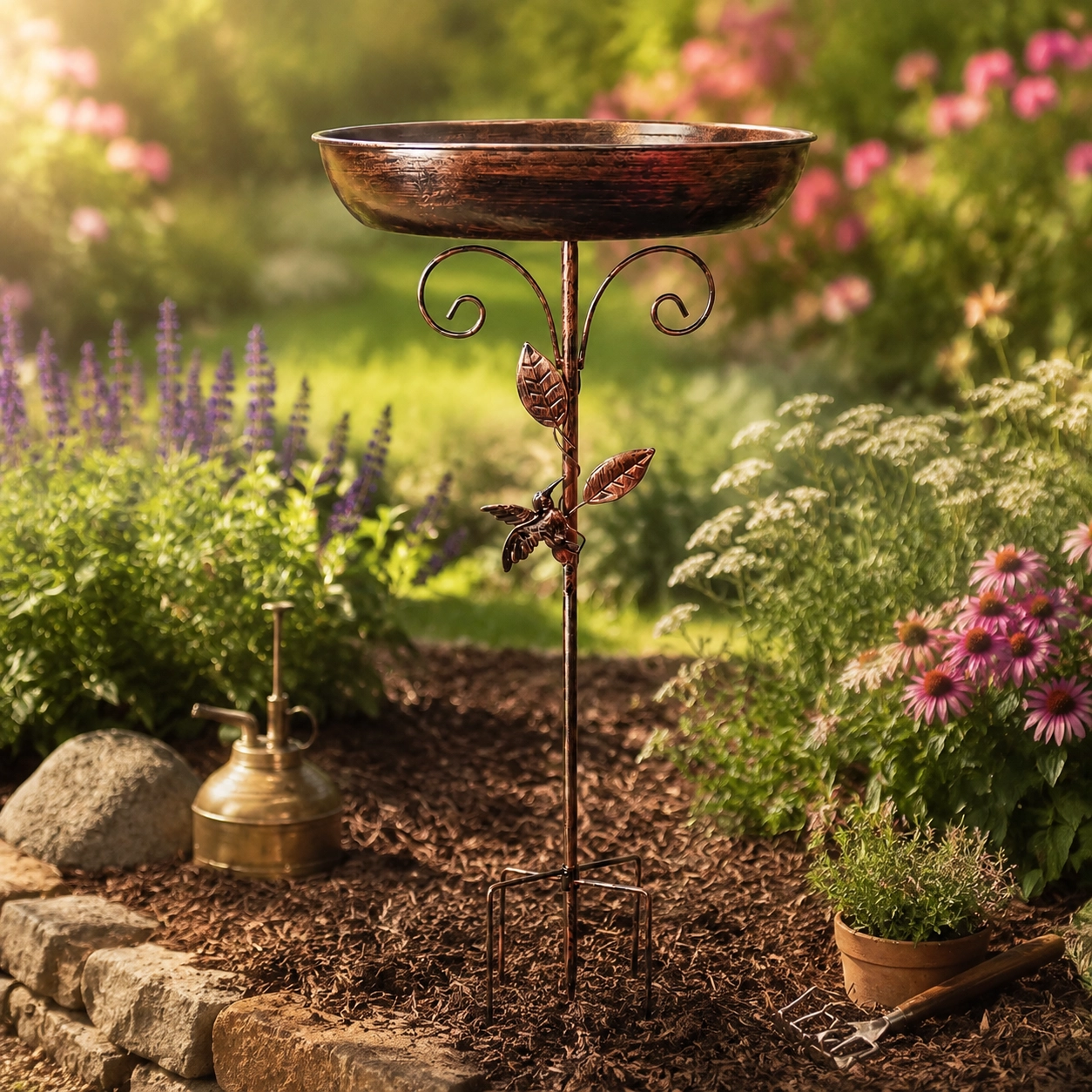
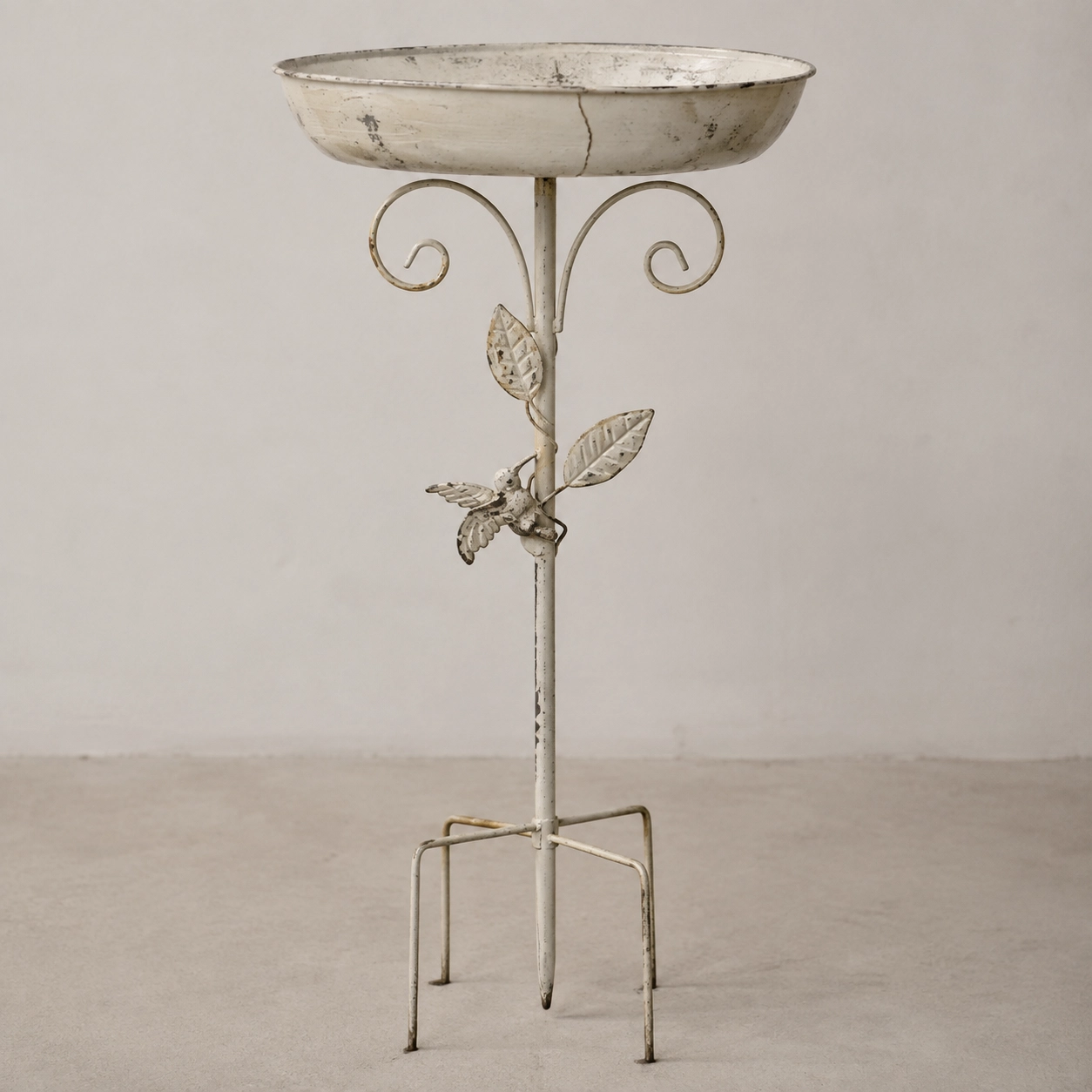
The basin is sized for 2 inches of water, which is the range a chickadee or a wren can stand in and still feel the bottom. Sides slope gently instead of dropping away, so a small bird can judge the depth from the rim before it commits. Steel construction under a hand-finished antique bronze-copper patina that will not chalk, will not bleed rust down the stem, and will not shed into the water. Scrolled stem with formed leaf detail and a sculptural hummingbird at the throat. A 5-prong ground stake spreads its grip through mulch into soil. Built to stay outside through freeze-thaw.

4 Decisions That Change Who Lands In Your Yard
Every one of them is about the bird first. The ironwork is what makes them hold for 30 winters.

What Separates the Wrenfield From Every Other Bird Bath
5 things budget plastic baths and heavy concrete pedestals both get wrong, and every one of them costs you birds.
 Rated 4.8/5 by 3,200+ Verified Reviews
Join 3,200+ Backyard Birders Who Retired the Concrete Pedestal
Real stories from American backyards about the week the birds finally showed up.


Meet Walter, The Man Who Found This Ironwork
Walter Josiah Brenneman has worked around iron for 47 years out of Lancaster, Pennsylvania. He is 71 now. He did not want another bowl on a pole, so he spent years chasing down the old-world workshop that still forms scrolled stems, leaf work and a hummingbird by hand, then had the basin cut wide and shallow to the depth a songbird will actually stand in. He puts it this way: "Iron will hold any shape you ask of it, but a bird only comes back if you shaped it right the first time." If your bath fails to feel meaningfully different from any garden-center alternative within 60 days, Walter refunds every penny. Not customer service. Walter.


Get Your Wrenfield Today $77 Instead of $231
Here's what Walter sends you today:
· 1 hand-finished Wrenfield bird bath with wide 2-inch basin, scrolled iron stem, hummingbird accent and 5-prong ground stake.
· Free US shipping included ($15 value).
· 60-day risk-free trial.
· Lifetime finish warranty.
Common Questions Before You Order
Straight answers about the water, the birds and the build.